
Perry Hall Previous Residents by Era
Era comes first in previous residents research. A modern parcel leads to an assessment account and a deed reference, while an older farm or village search may need a tract, plat, or road variant. No single source gives a complete occupancy chain. Keep two strands together. The legal strand runs through deeds, plats, and the recorder's instruments. The social strand runs through directories, census records, newspapers, association papers, cemetery material, and family files. The Perry Hall residents directory table shows what each source actually covers. It also flags which sources are contextual.
| Source | Years it covers | Where held | What it shows |
|---|---|---|---|
| SDAT, County GIS, and recorded deed references | Current parcel data with historical availability varying | State and Baltimore County portals | Account, legal description, parcel identifiers, deed reference, and mapping context |
| Maryland Land Records | Earlier conveyances reached from parcel or party references; no uniform online cutoff stated | MDLandRec and Baltimore County Circuit Court Clerk | Grantor/grantee, document type, date, book/page, legal capacity, and instrument route |
| Baltimore County plat series | Series varies; subdivision plats begin in 1945 | Maryland State Archives plat portal and clerk route | Subdivision, book/page, date, description, plat, lot, block, and road clues |
| UMBC PHIA Collection 2 | 1945-1986 | UMBC Special Collections | Association rosters, directory material, minutes, correspondence, and community context |
| Baltimore city, suburban, and “City and Suburbs” directory guide | About 1800-1940 for BMS31, with gaps | Maryland State Archives and BCPL microform route | Historical city-area context, not a continuous Perry Hall run |
| Federal census | 1790-1950 | NARA and library databases | Dated enumeration context when the period geography fits |
| County permit layer | 1995-present; pre-2002 points have a geocoding caveat | Baltimore County GIS | Administrative activity by parcel, not a household list |
Start with MDLandRec for legal ownership history. Start with an archive or library when the question is a dated household. Match the fallback to the record. The Towson clerk handles court instruments. The Maryland State Archives, Perry Hall Branch, HSBC, or an UMBC appointment covers older or archival material, depending on which record is needed.
Perry Hall's 1774 Estate Trail
Early Perry Hall house history is a land search. Modern street addresses barely existed. The Baltimore County community plan records that Harry Dorsey Gough bought the roughly 1,000-acre “The Adventure” tract in 1774. He renamed it Perry Hall. The mansion was finished in 1775. Those facts anchor searches in deeds, plats, probate files, newspapers, Maryland State Archives guides, and historical-society files, but they do not create a continuous list of occupants at any later address.
For an older parcel, record the tract or legal description before attaching a later road name. County history dates the estate subdivision to 1875. After that break, the search unit shifts from estate or farm to subdivision, lot, block, and street. Germantown and Indian Rock help too. The two historical place names appear in newspapers, maps, association files, and archive catalogs, though their exact boundaries should be confirmed from a plan map before use as current locations.
Perry Hall Previous Residents After 1875
The 1875 subdivision is the practical breakpoint. Before it, the trail runs through tracts, farms, probate files, and plat books. After it, a legal description ties a lot and subdivision to deeds and later street-address variants. Perry Hall's later milestones help set a time window. The Improvement Association began in 1945. A shopping center dates to 1961. The first public library and high school arrived in 1963, and Seven Courts followed in 1981.
Treat those dates as research windows, not shortcuts. A newspaper or residents directory mention near a milestone is still a clue that needs its own citation. A plat can prove a road, lot, or subdivision relationship. It cannot prove who lived there. That distinction matters most where a modern address has replaced a farm, village, or older road description.
Perry Hall Previous Residents via MDLandRec
Start with the parcel, not a person. In SDAT and County GIS, save the account or PAN, premises address, legal description, map, grid, parcel, subdivision or lot, and deed reference for the Perry Hall property. That bundle is the search key. The official assessment number can differ from the number an owner or occupant uses. A mailing address is not proof of residence. These details become the bridge to Maryland Land Records and the Baltimore County Circuit Court Clerk.
The path runs through grantor, grantee, and book/page entries. The Maryland Land Records search guide shows how to locate recorded instruments by that route.
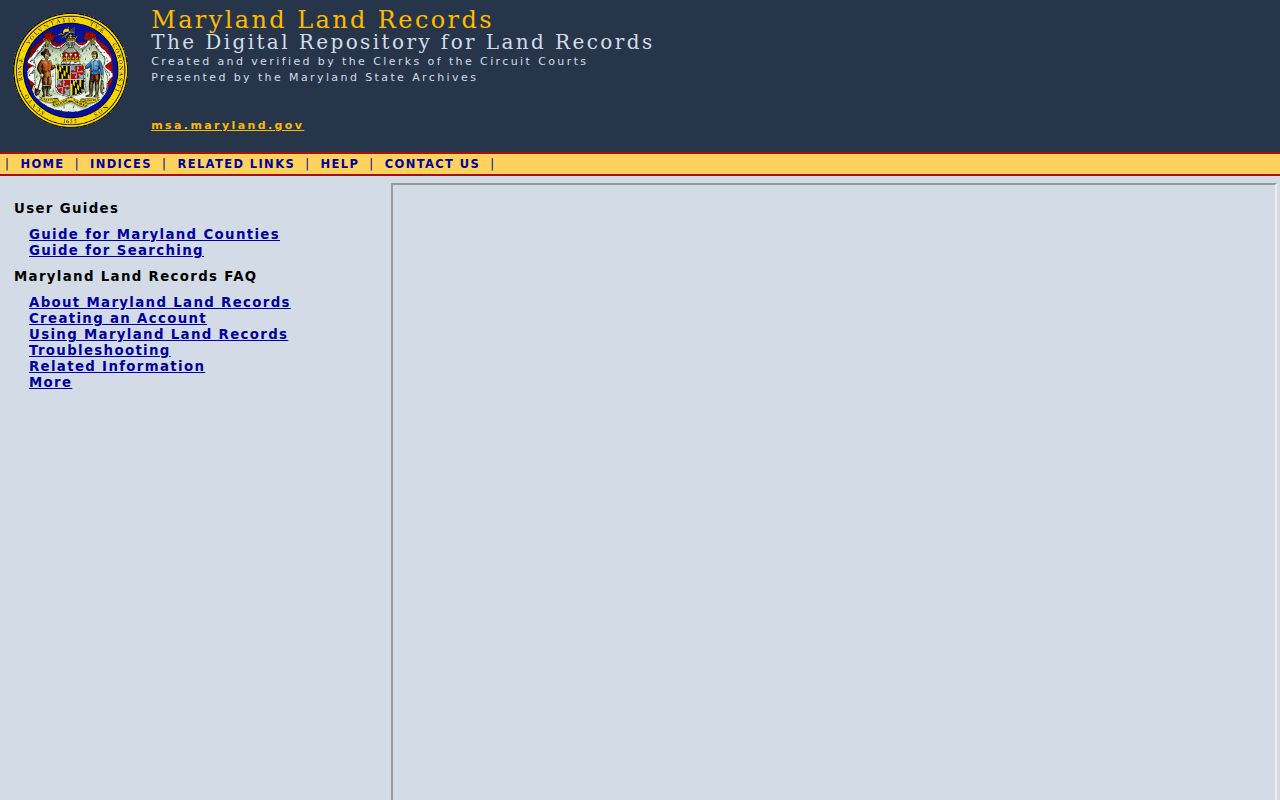
MDLandRec covers Baltimore County with searches by grantor or grantee, party type, document type, remarks, date, book/page, and legal capacity. Viewing images takes an account and MFA. The Circuit Court Clerk verifies instruments. Land recording sits at 401 Bosley Avenue, Towson, MD 21204, phone 410-887-2651, with indexing at 410-887-3088. Public counters open weekdays from 8:30 a.m. to 4:30 p.m. Confirm copy or certification fees before any request.
- Search the address, account, map reference, or existing deed reference in SDAT and County GIS, then copy the legal description and parcel identifiers.
- Open the current deed reference or locate the buyer in the MDLandRec grantee index, preserving the document date and book/page.
- Read the conveyance for the seller, prior legal description, subdivision wording, and any reference to an earlier instrument.
- Search that seller as a grantee to locate the prior purchase, then repeat the same recorded chain backward.
- When the portal route ends or an image is unavailable, ask the Towson clerk or Maryland State Archives about the earlier book, index, or series.
- Grantor / grantee
- The grantor transfers an interest in the recorded instrument; the grantee receives it. Neither label alone proves household residence.
- Chain of title
- A sequence of recorded conveyances connecting one legal interest to an earlier one. It is a legal trail, not a complete occupancy list.
- Legal description
- The parcel wording, map, lot, block, tract, or subdivision reference used in a record. It remains useful when a street address changes.
Perry Hall Plat and Parcel Clues
Plats turn deeds into land patterns. Baltimore County's plat portal searches by subdivision, book/page, date, description, plat or box, clerk initials, or series. The series run wide. They include subdivision plats from 1945, land records, tract indexes, plat books, microfilmed plats, state-road plats, and right-of-way material. That range helps most after 1875. A plat still needs its deed. Read every plat with the linked deed and legal description. The Baltimore County plats portal provides the source controls for subdivision and book-page research.
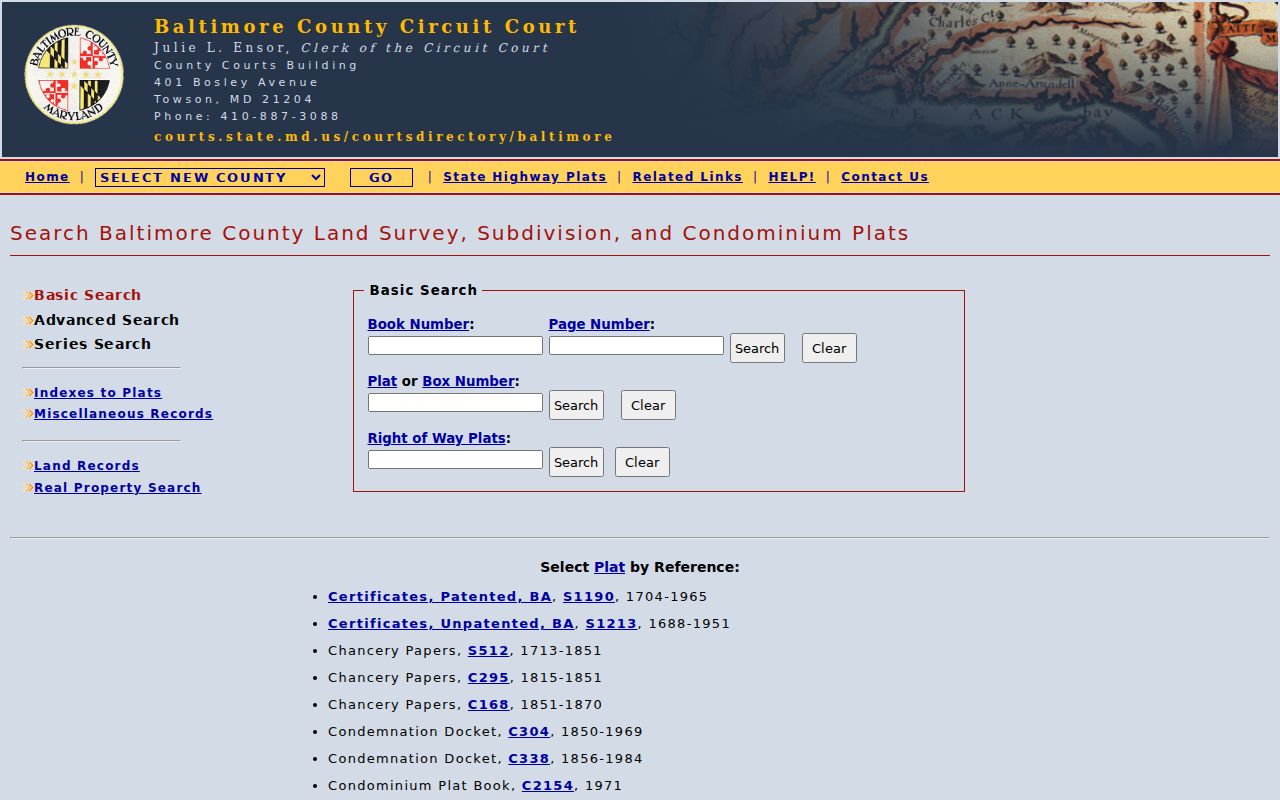
A plat labels roads, lots, blocks, and subdivisions for Perry Hall. It does not name the people who lived at them. So treat plats as map evidence, not a residents directory. A plat can conflict with a legal description. In that case, the clerk-held deed and plat control the record. The county GIS layer stays mapping context.
Perry Hall Previous Residents in PHIA
For postwar households, UMBC's PHIA Collection 2 is the strongest Perry Hall-specific archive. It spans 1945 through 1986. It holds association histories, bylaws, rosters, member directories, minutes, correspondence, zoning and law files, publications, clippings, and research files. The directory-related groups reward date discipline. Member-directory material covers 1945 to 1955. Member lists run 1963 to 1978. A directory and inactive file spans 1945 to 1974. A 1978 telephone directory rounds out the set. These records can anchor a person in an association context or point toward another source.
They are not a current resident database, and wholesale reproduction is off limits. The finding aid sits online. The collection itself is open only by appointment in the UMBC Special Collections reading room. UMBC lists Monday through Wednesday noon to 4 and Thursday noon to 7. The phone is 410-455-2353, plus speccoll@umbc.edu. For County-held planning context, a narrow Maryland Public Information Act request should name the address or parcel, the record type, the date range, and a preferred electronic format. Avoid requesting a broad personal file.
Perry Hall Previous Residents Household Trail
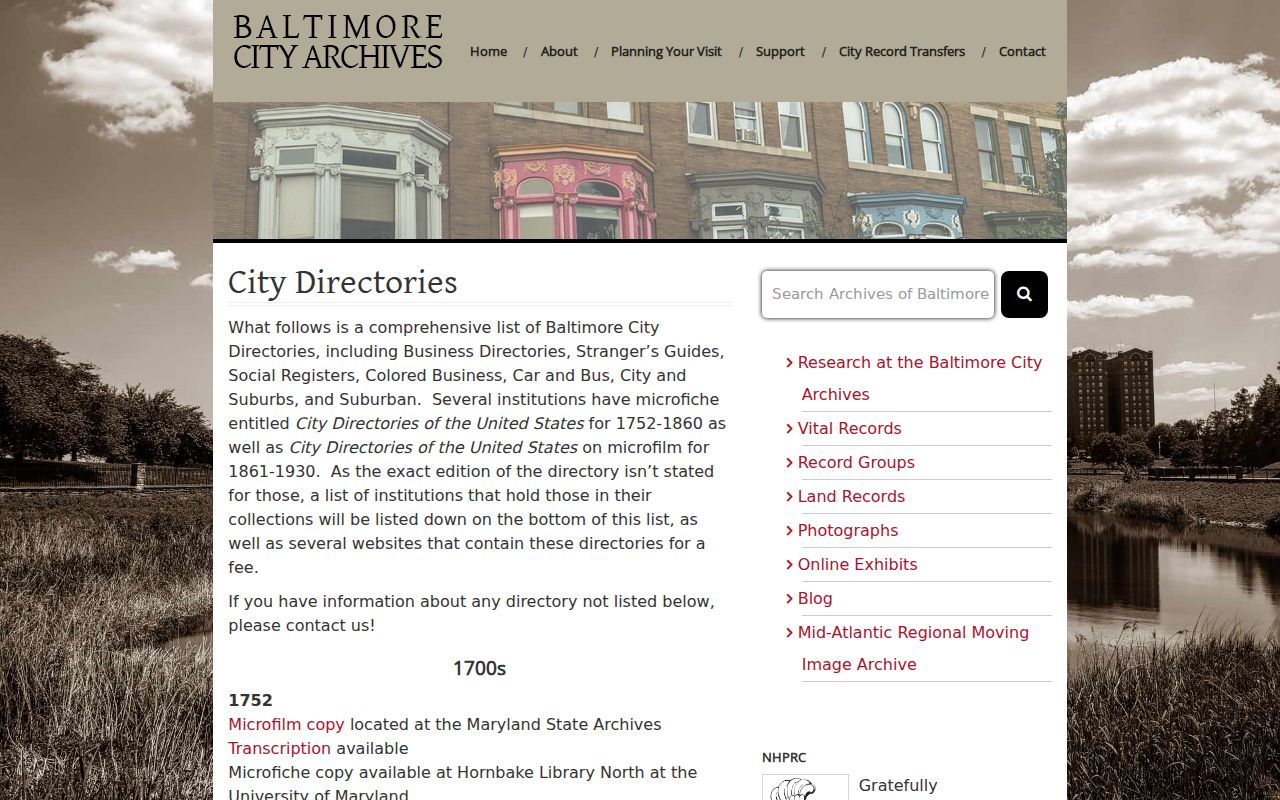
Previous residents are not always prior deed parties. A household trail needs a date-specific record beside the legal chain. The Maryland State Archives' Baltimore guide covers city, suburban, and combined "City and Suburbs" directory material. BCPL holds microform city directories. Yet no continuous Perry Hall city directory or named local criss-cross run exists. State that limitation plainly. The historical collections themselves appear on the Perry Hall directory book page.
The Maryland State Archives directory guide traces the Baltimore-area directory path. The BCPL microform note sits alongside it.
Match the closest directory year to a federal census. But do this only when the enumeration geography fits the date. NARA's census route spans 1790 to 1950, with 1950 the latest released enumeration. Then test a household clue against BCPL newspapers. HSBC surname or cemetery files can help too. A deed or plat reference works as well. Expect one wrinkle. A later-suburban CDP label will not appear unchanged in early census schedules.
Perry Hall House-History Files at HSBC
The Historical Society of Baltimore County supplies the local-history layer that deeds and directories miss. Its holdings include surname files, vertical files, cemetery inscriptions, family histories, clippings, maps, ledgers, and manuscripts. The collection also holds limited Baltimore City and County directories. The vertical-file index splits Perry Hall material into community history, the Methodist congregation, Perry Hall Elementary, and the Mansion. The publication catalog adds Perry Hall. An Invitation to Memory from 1970 and Perry Hall's Earliest Settlers from 1922 as leads. Together these files can carry a house-history thread past what a city directory shows.
The Historical Society of Baltimore County library page describes the surname, vertical-file, and cemetery routes. It also covers paid mail-research options.
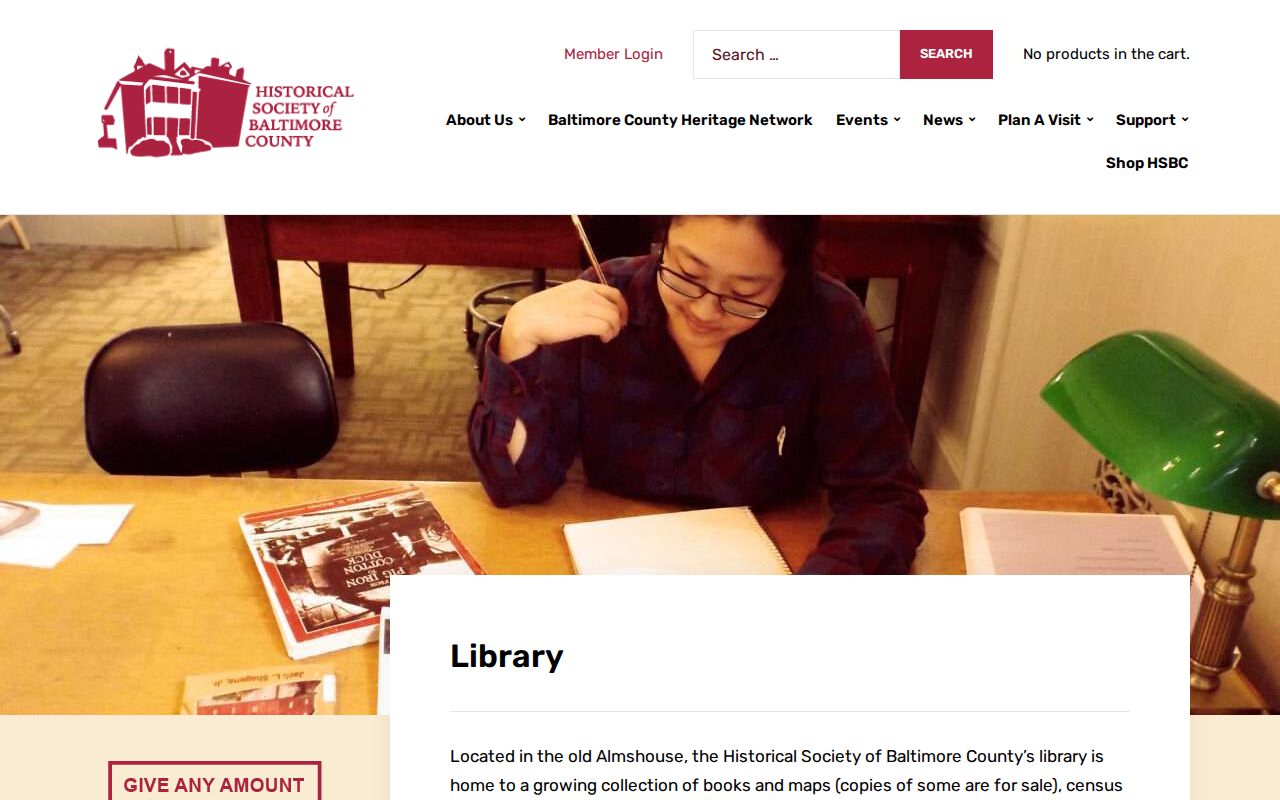
The library sits at 9811 Van Buren Lane in Cockeysville. It is open Friday and Saturday from 10 to 2, and the phone is 410-666-1878. Nothing circulates. Nonmembers pay a visitor fee. Mail research is billed hourly, so confirm current charges before submitting a request. Ask for a named file, surname, road, property, or date window. That keeps the search reproducible.
Perry Hall Previous Residents Privacy
A parcel owner, deed party, directory entry, association member, and occupant are distinct historical roles. Keep the record date, source, and role beside every name. That habit matters most for recent addresses. Maryland Safe at Home shields the actual address of qualifying participants through a substitute-address program. Vital records carry eligibility limits. Courts can restrict sealed or shielded material, and library or donor rules can limit access to archival content. A public source is not permission to republish sensitive details or contact a person.
Lawful use. Use Perry Hall previous-resident research for house history, family history, heir matters, or personal curiosity, and do not use a record to follow, threaten, or harass a living person. Maryland’s harassment and stalking statutes, General Provisions §3-803 and §3-802, can apply to harmful conduct.
When the trail ends, preserve the gap. A missing record is just that. Guessing who lived at an address helps nobody, and it can quietly mislead a whole family search.
The next legitimate step is usually an archive appointment, a clerk request, an HSBC file, or a precise County request. Those routes respect the records. They also respect the past residents whose names sit inside them.